Flooring Sustainability Drives a New Era for Premium Hardwood Products
- Share
- Issue Time
- Jul 30,2026
Summary
Recent industry statistics show that premium hardwood flooring continues to perform well despite overall market challenges. Demand is increasingly driven by sustainable sourcing, engineered wood technology, natural design trends, and high-quality manufacturing. These developments create new opportunities for flooring manufacturers, distributors, architects, and builders seeking durable and environmentally responsible flooring solutions.
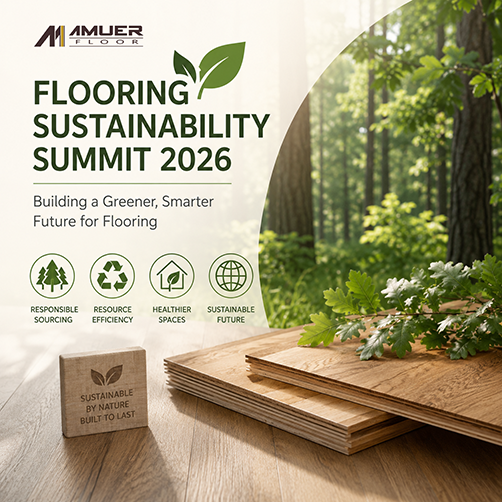
Flooring Sustainability Drives a New Era for Premium Hardwood Products
Published by AMUER
July 30, 2026
The global hardwood flooring industry is entering a new phase where sustainability, premium product positioning, and manufacturing efficiency are becoming the primary drivers of growth. Recent industry data released byFloor Covering News indicates that while overall hardwood flooring sales in the United States declined modestly in 2025, premium wood flooring products continued to outperform the broader category. The findings suggest that architects, builders, distributors, and homeowners are increasingly prioritizing quality, design, and long-term value over low-cost alternatives. ([Floor Covering News][1])
Premium Hardwood Continues to Outperform
According to the latest market statistics, hardwood flooring represented approximately 7.5% of the total U.S. flooring market value in 2025. Although total hardwood sales declined compared with the previous year, the rate of decline slowed significantly, indicating that the market may be stabilizing after several years of intense competition from luxury vinyl plank (LVP), rigid core flooring, and laminate products. ([Floor Covering News][1])
Industry experts note that premium hardwood products remain resilient because they offer qualities that synthetic flooring materials cannot fully replicate. Natural grain variation, authentic texture, repairability, and long service life continue to appeal to both residential and commercial buyers seeking durable interior finishes.
Engineered Wood Flooring Meets Modern Construction Needs
One of the strongest trends identified by manufacturers is the continued demand for engineered wood flooring. Compared with traditional solid hardwood, engineered construction provides greater dimensional stability while preserving the appearance of genuine hardwood.
This makes engineered flooring particularly suitable for modern construction projects that incorporate underfloor heating systems, large-format rooms, and environments with seasonal humidity changes. Multi-layer construction also enables manufacturers to maximize the efficient use of hardwood resources while maintaining product performance.
European oak flooring remains among the most requested materials due to its durability, timeless appearance, and compatibility with a wide variety of interior design styles.
Sustainability Influences Purchasing Decisions
Environmental responsibility is becoming an increasingly important factor throughout the flooring supply chain. Architects, developers, and distributors are paying closer attention to certified timber sourcing, responsible forest management, and manufacturing transparency when selecting suppliers.
Rather than evaluating flooring products solely by appearance or price, professional buyers are increasingly considering lifecycle performance, material traceability, and environmental certifications. These requirements are encouraging flooring manufacturers to invest in cleaner production technologies, improved resource efficiency, and sustainable procurement practices.
The growing emphasis on sustainability also supports the broader adoption of engineered wood products, which allow manufacturers to optimize hardwood utilization while reducing material waste.
Design Trends Continue to Favor Natural Materials
Current flooring trends show continued interest in authentic wood aesthetics. Wide plank flooring, matte finishes, brushed textures, and natural color variations remain popular choices across residential, hospitality, and commercial projects.
Designers are increasingly selecting flooring that highlights the natural character of wood instead of uniform artificial surfaces. Traditional installation patterns such as herringbone and chevron are also experiencing renewed popularity as they combine timeless craftsmanship with contemporary interior design.
These design preferences reinforce the position of engineered hardwood flooring as a premium architectural material capable of meeting both functional and aesthetic requirements.
Opportunities for Flooring Manufacturers
For flooring manufacturers and international suppliers, the latest market developments highlight the importance of product differentiation rather than competing solely on price.
Advanced manufacturing equipment, strict quality control systems, and flexible production capabilities are becoming key competitive advantages. At the same time, distributors increasingly seek reliable partners capable of providing consistent specifications, dependable delivery schedules, and customized product solutions for regional markets.
Manufacturers that combine sustainable sourcing with modern production technologies are likely to be better positioned as construction activity gradually recovers in North America and other international markets.
Industry Outlook
Although competitive pressure from alternative flooring materials remains strong, recent market data suggests that premium hardwood flooring continues to maintain a valuable position within the global flooring industry. Buyers are placing greater emphasis on product quality, sustainability, and long-term performance rather than short-term cost savings.
As construction professionals increasingly prioritize environmentally responsible materials, engineered wood flooring is expected to remain an important solution for residential, commercial, and hospitality projects worldwide. Continued investment in sustainable manufacturing and product innovation will help support the industry's long-term development. ([Floor Covering News][1])
Conclusion
The latest industry statistics demonstrate that while the hardwood flooring market continues to evolve, premium engineered wood flooring remains well positioned for future growth. Manufacturers that focus on sustainability, quality, and innovation are expected to benefit from changing customer expectations and increasing demand for authentic wood products.
AMUER manufactures engineered wood flooring for global residential and commercial markets, combining advanced production technology with responsible manufacturing practices. Learn more about AMUER's engineered wood flooring solutions at https://www.amuerflooring.com.
Summary
Recent industry statistics show that premium hardwood flooring continues to perform well despite overall market challenges. Demand is increasingly driven by sustainable sourcing, engineered wood technology, natural design trends, and high-quality manufacturing. These developments create new opportunities for flooring manufacturers, distributors, architects, and builders seeking durable and environmentally responsible flooring solutions.
Keywords
Engineered Wood Flooring
Hardwood Flooring
Sustainable Flooring
European Oak Flooring
Flooring Manufacturing
Sources
Floor Covering News –Stats 2026: High end is saving grace for hardwood([Floor Covering News][1])
National Wood Flooring Association (NWFA) Manufacturing Standards ([nwfa.org][2])