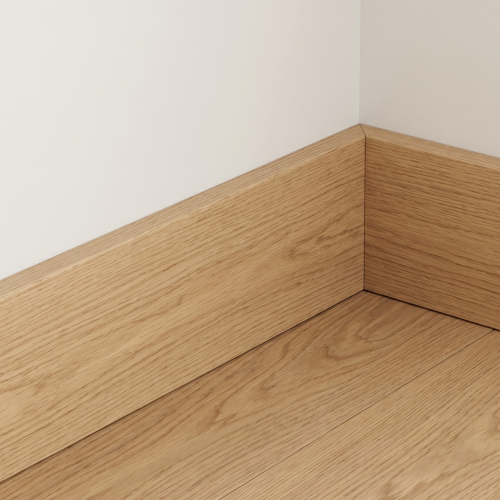
AMUER Natural Wood Skirting Boards — Floor-Matched, Precision-Finished, Built to Last
Review
Description
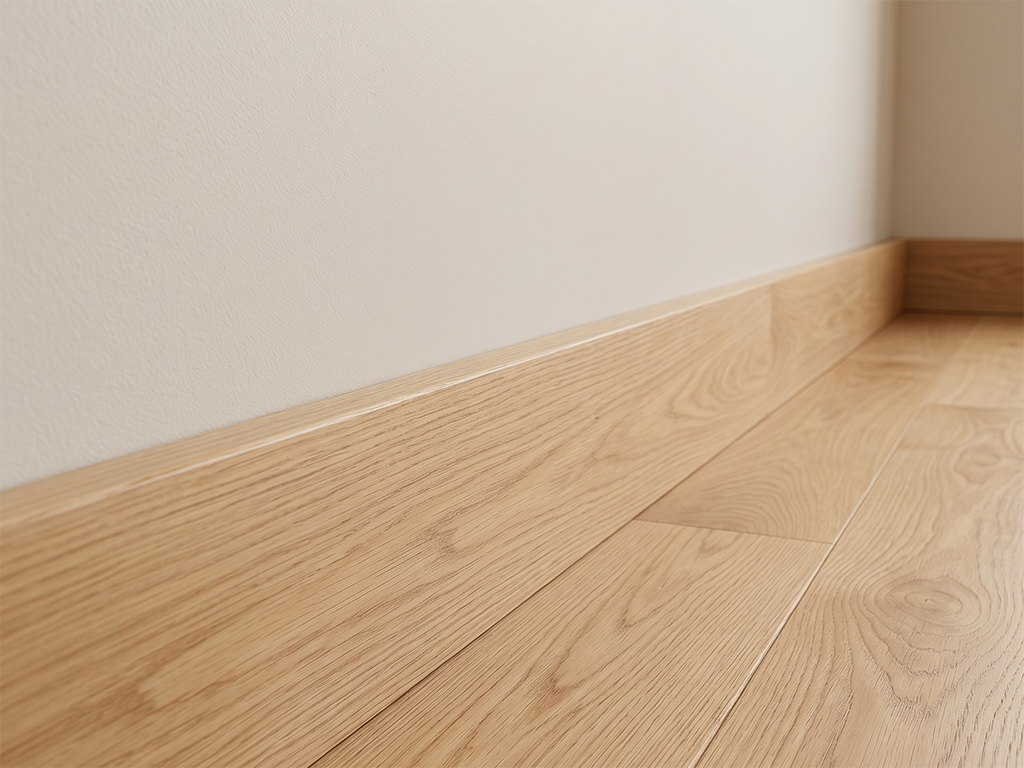
The skirting board is one of the most overlooked details in an interior — yet it is one of the first things a discerning eye notices when it is wrong. A mismatched baseboard disrupts the visual continuity of a room, cheapens the appearance of even an expensive floor, and signals a lack of attention to craft.
AMUER skirting boards are designed to eliminate this problem entirely. Manufactured from the same natural wood as your floor order, finished with the same surface treatment, and produced in the same production run, AMUER skirting boards integrate seamlessly into the room — completing the material story from floor to wall.
Whether you are fitting a shadow-gap detail in a contemporary apartment, a tall classic profile in a period renovation, or a low, discreet baseboard in a minimalist space, AMUER offers three carefully designed profiles to suit every architectural context.
What Is a Skirting Board — and Why Does It Matter?
Functional Roles of a Skirting Board
Aesthetic Role of the Skirting Board
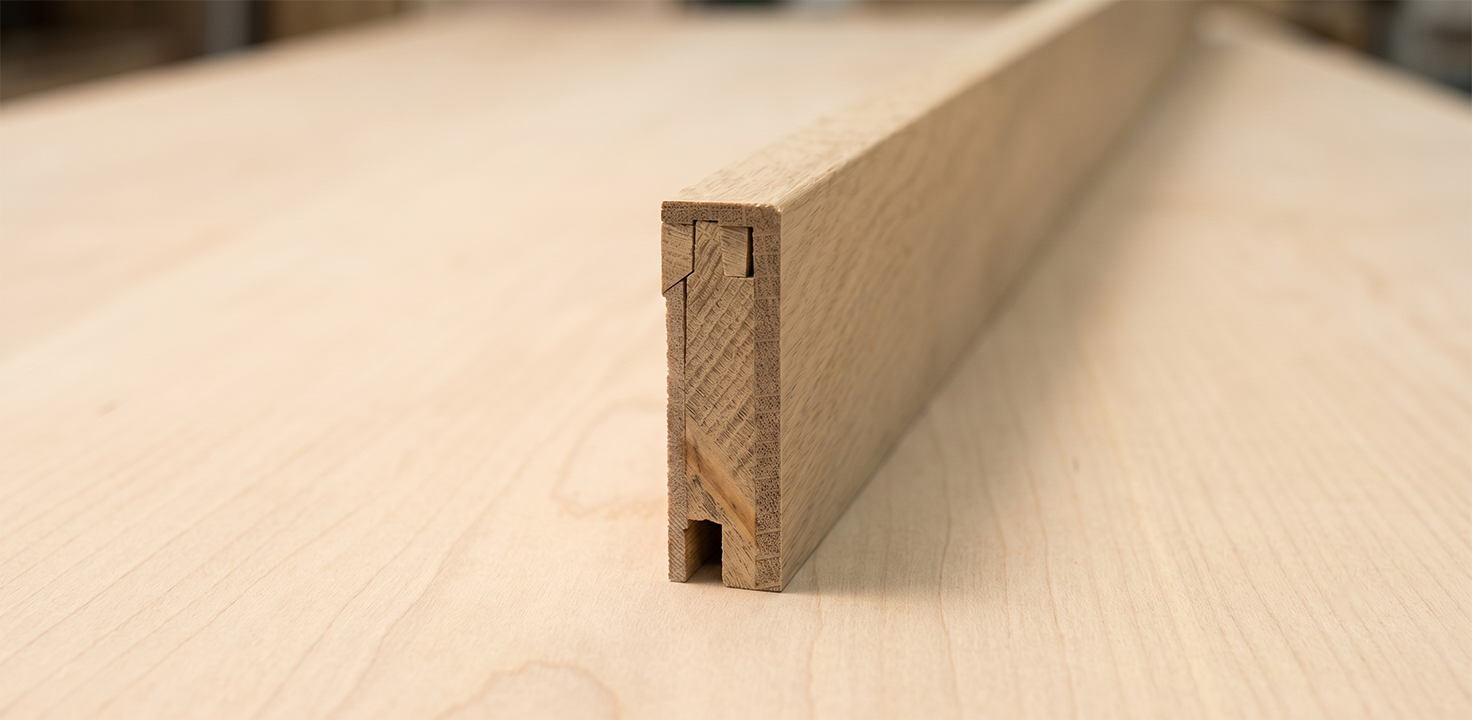
Specification | Detail | ||
Standard Length | 2,200 mm per board | ||
Profiles | Profile I (20 mm) / II (40 mm) / III (60 mm) | ||
Sales Unit | Bundles only — minimum order quantity applies per profile | ||
Order Timing | Manufactured together with the flooring order | ||
Purpose | Aesthetic floor-to-wall transition + expansion joint cover | ||
Wall Protection | Shields wall from moisture, cleaning agents, and vacuum contact | ||
| Profile | Height | Design Character | Recommended For | |||
| Profile I | 20 mm | A modern trim for minimalist concepts. The floor takes center stage — the skirting almost disappears. | Open-plan spaces, lofts, minimalist and contemporary interiors | |||
| Profile II | 40 mm | A classic trim that works with any style of decor. Visible yet understated — the most versatile choice. | Apartments, Scandinavian interiors, standard residential (ceiling 2.4–3.0 m) | |||
| Profile III | 60 mm | A tall trim that becomes an aesthetic element in its own right. Adds presence and proportion to the room. | Premium residential, hospitality, transitional interiors (ceiling 2.7–3.5 m) | |||
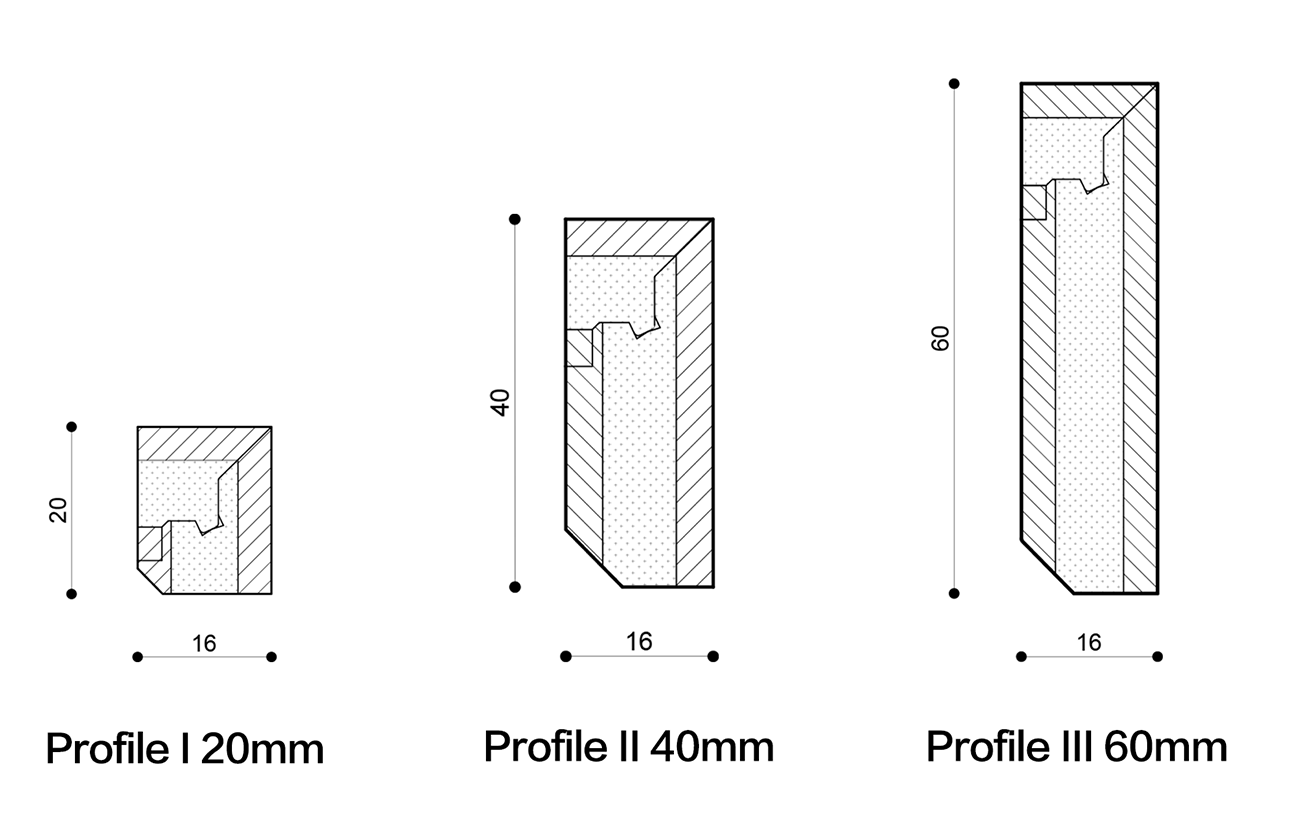
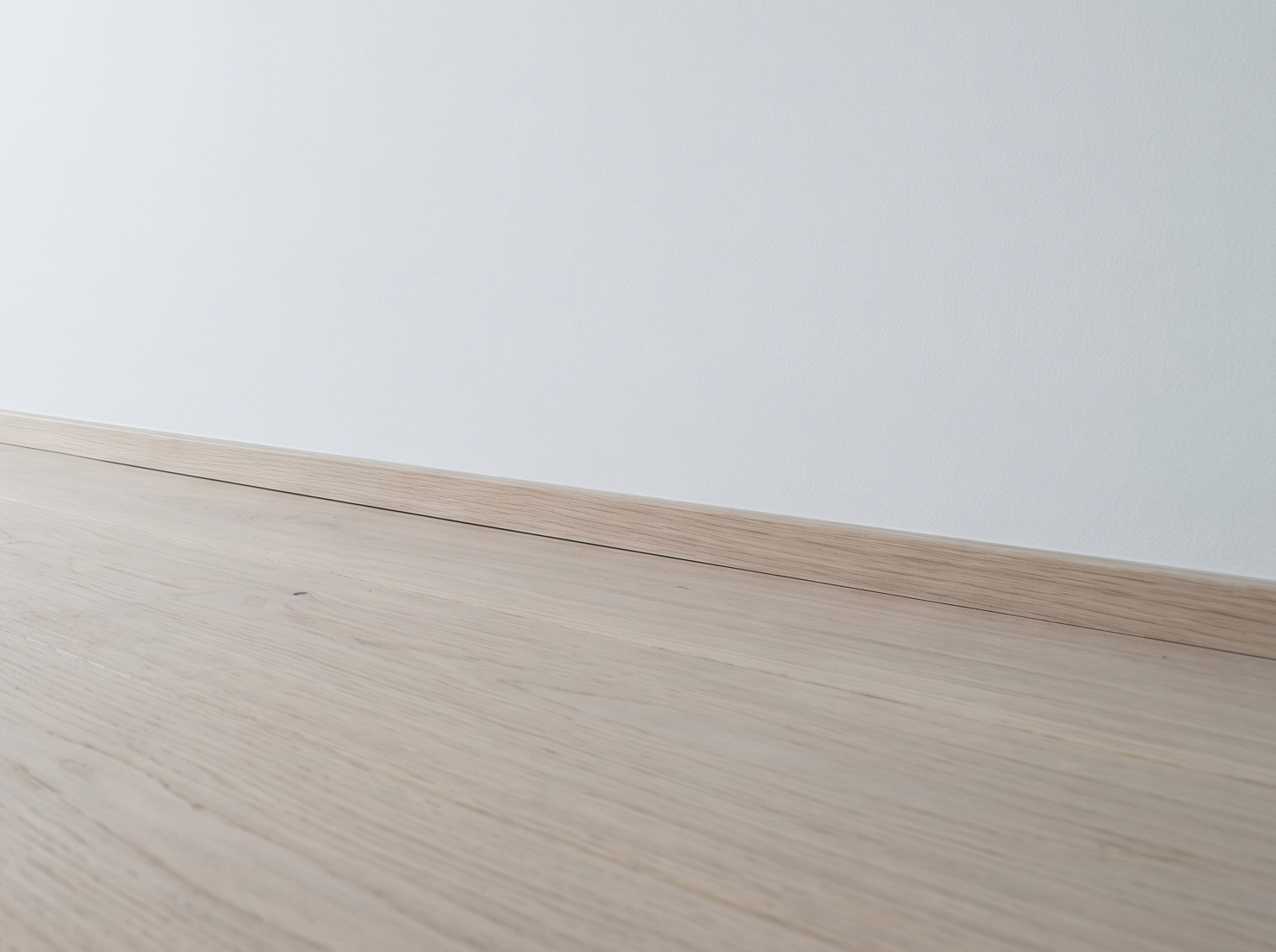
The most minimal option. At just 20 mm high, the skirting board is barely perceptible — making it ideal for spaces where the floor should be the visual focus. Popular in contemporary open-plan interiors, lofts, and minimalist residential projects.
The classic all-rounder. At 40 mm, this profile provides a clean and well-proportioned finish that works equally well in contemporary, traditional, and Nordic interiors. The most widely specified profile across all ceiling heights.


A tall skirting board that becomes part of the design language. At 60mm, it adds architectural weight and a sense of quality to premium residential and hospitality spaces. Works best in rooms with ceiling heights of 2.7 m and above.
| Species | Character | Typical Use | |||
| European Oak | Dense grain, warm cream to deep amber — broadest color palette | Any interior; most specified species | |||
| Walnut | Dark, richly figured; immediately luxurious | Premium dark-tone interiors, contrast accents | |||
| Ash | Pale, athletic grain; bright and linear | Scandinavian, New Nordic, minimalist | |||
Larch | Warm reddish-orange, visible knots, rustic character | Farmhouse, organic, alpine-inspired | |||
Douglas Fir | Sustainably sourced softwood; relaxed, natural tone | Casual, wide-plank, informal spaces | |||


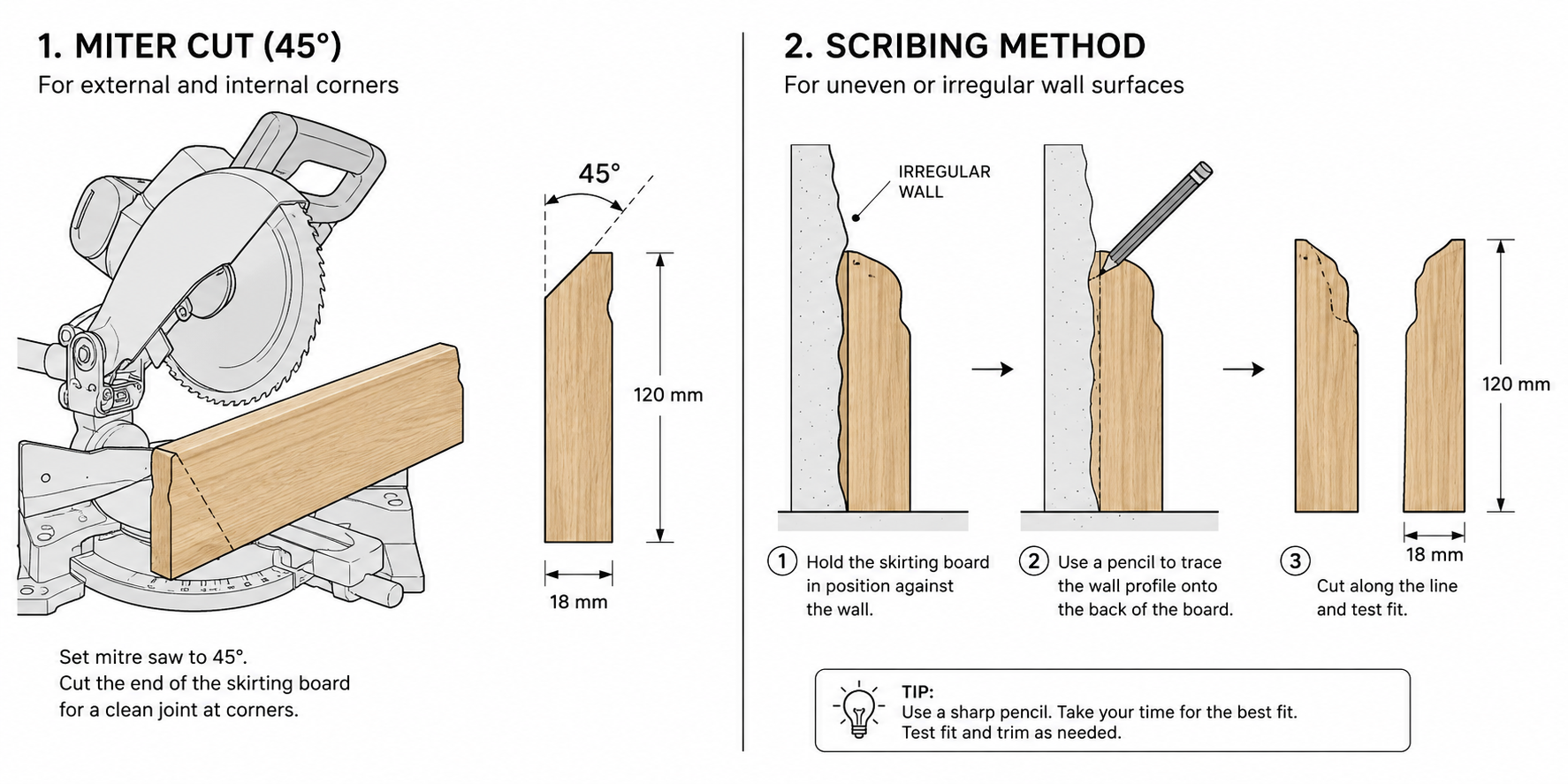

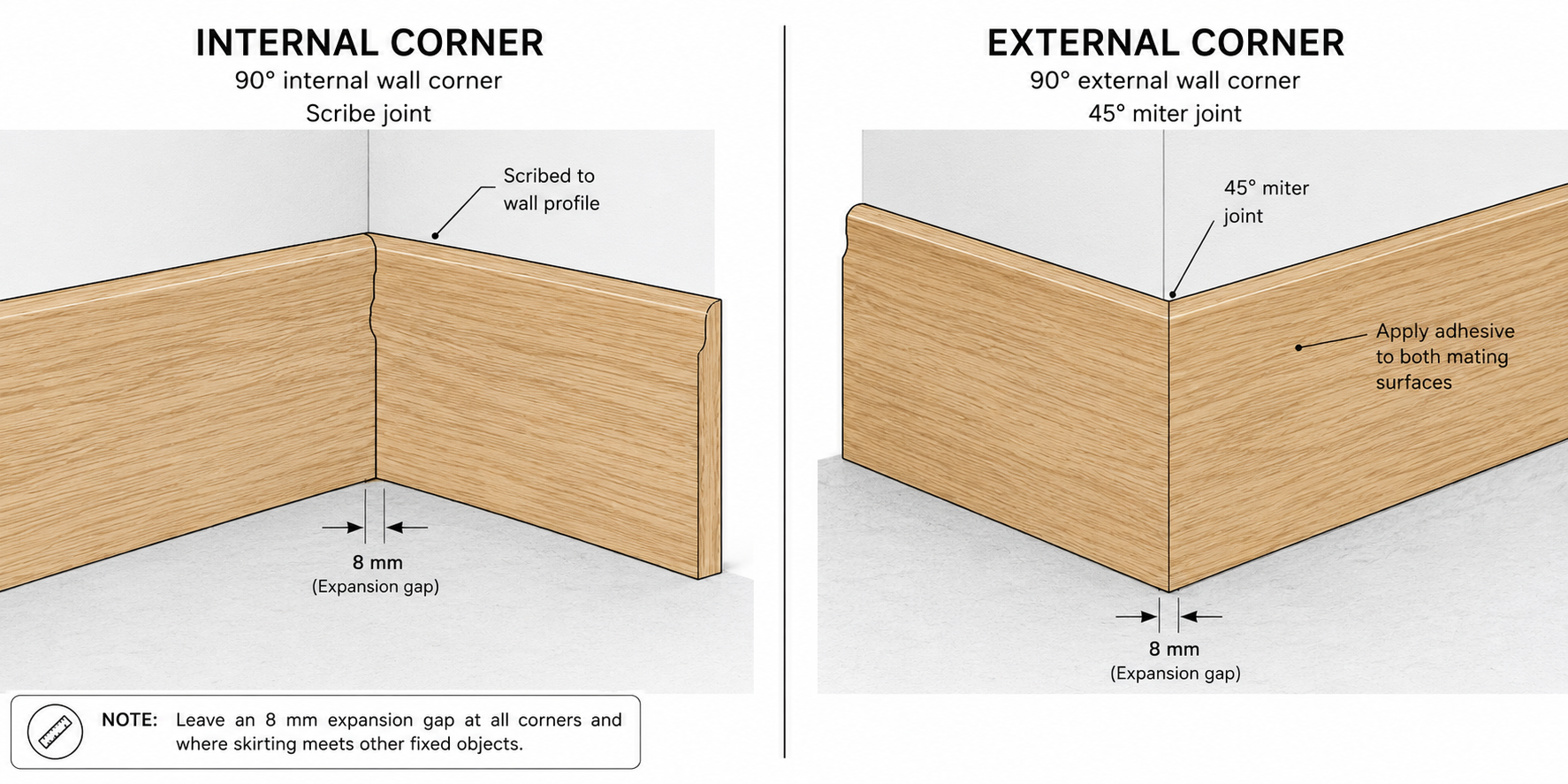
Q: Can AMUER Skirting Boards Be Used With Underfloor Heating?
Q: What Profile Is Most Popular?
Q: Can I Paint AMUER Skirting Boards?
Q: Are Shadow-Gap Skirting Solutions Available?


